

Your GP hands you a referral after a knee reconstruction, or after your third flare-up of lower back pain this year, and it says something like “physiotherapy or exercise physiology as appropriate.” Nobody explains which one, or why there are two options on the same page. If you’ve searched exercise physiology vs physiotherapy and landed here still unsure, that confusion is reasonable.
Both professions treat movement problems with exercise, and both show up on the same Medicare referral pathways. The overlap is real. So is the distinction, and it usually comes down to where you are in your recovery rather than which title sounds more clinical.
What Physiotherapy Is Built For
Physiotherapists are AHPRA-registered allied health professionals who assess, diagnose and treat injuries and movement problems, generally starting when something is acute, recently injured, or not yet properly diagnosed. A physiotherapy consultation opens with a structured assessment: how the injury happened, what movements aggravate it, what any imaging shows, and what’s actually driving the symptom rather than just where it hurts. Treatment might include manual therapy, dry needling, joint mobilisation, or a specific exercise program, depending on what that assessment turns up.
This is musculoskeletal physiotherapy in its usual form: matching hands-on and exercise-based treatment to a diagnosis, then adjusting the plan as the injury changes. It covers everything from a rolled ankle to post-operative rehabilitation to nerve-related pain, and it’s the right starting point any time pain or injury is new, unclear, or hasn’t been formally assessed yet.
What Exercise Physiology Is Built For
Accredited exercise physiologists work from a different starting point. Rather than diagnosing an injury, they design and deliver exercise physiology programs for people managing an existing diagnosis: a chronic condition, a stable but ongoing injury, or a body that’s cleared the acute stage and needs structured, progressive loading to get stronger. Sessions tend to run longer than a typical physio consultation and lean heavily on exercise prescription rather than hands-on treatment, often in a small-group or gym-based setting.
Chronic condition management is where this pathway earns its keep. Osteoarthritis, cardiovascular disease and long-standing pain can all respond to structured exercise, and this is exercise physiology for chronic conditions in practice: a program built around what a specific condition can safely handle, then progressed over weeks and months rather than delivered as a single fix. Many people access this pathway through a GP-issued Chronic Disease Management plan, naming it as a GP referral for exercise physiology, though private bookings without one work too.
Exercise Physiology vs Physiotherapy: Where the Overlap Comes From
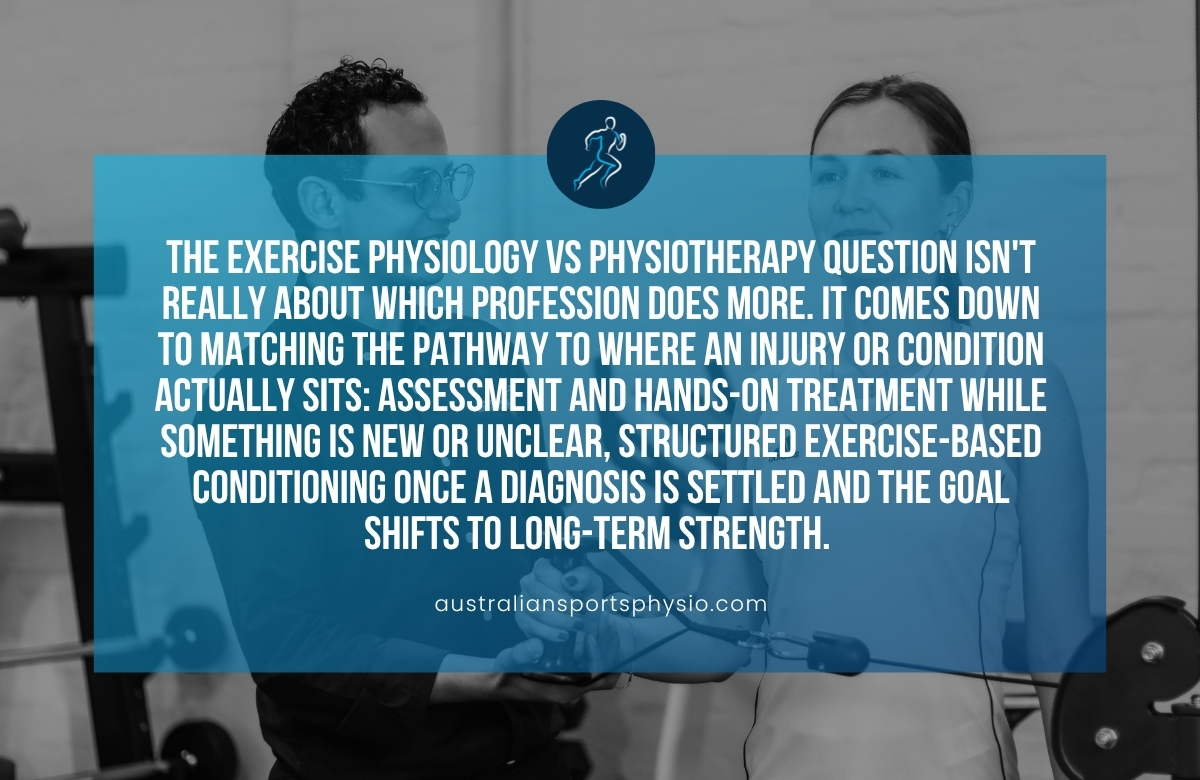
Both professions prescribe exercise, and a physio and an exercise physiologist might genuinely give a client the same handful of exercises for a dodgy knee. The overlap sits in the tools, not the purpose. A physiotherapist uses exercise as one part of diagnosing and treating an injury during its active, changing phase. An exercise physiologist uses exercise as the primary tool for managing something already diagnosed, once the priority shifts to long-term, structured loading rather than ongoing hands-on treatment.
That’s really the difference between an exercise physiologist and a physiotherapist in a single sentence: one investigates and treats, the other builds and progresses. Neither description makes one more useful than the other. It just means they tend to show up at different points on the same recovery timeline.
Matching the Pathway to Where You Actually Are
Exercise physiology usually fits best once a diagnosis already exists and the priority becomes long-term, structured loading rather than assessment. That covers two overlapping situations: someone managing an ongoing chronic condition such as osteoarthritis, type 2 diabetes or long-standing lower back pain, and someone who’s just finished a physio-led rehabilitation program (a knee reconstruction, a hip replacement, a tendon repair) and been cleared to move on but told to keep building strength. In the first case there’s no new injury to diagnose. In the second, the physio phase already settled the acute problem and restored basic movement, so what follows is post-rehab exercise physiology: a conditioning block, often gym-based and progressively loaded, that keeps the original problem from resurfacing.
GP referrals add another layer to this. A referral naming both physiotherapy and exercise physiology as appropriate options usually means your GP isn’t sure yet which one fits first, or expects you’ll need both at different stages. Bringing the referral to an initial physiotherapy assessment is a reasonable way to get an experienced read on where to start, particularly if there’s still pain, swelling, or a diagnosis that hasn’t been confirmed.
When You Genuinely Need Both
The two aren’t mutually exclusive, and plenty of people move between them or use both at once. Someone a few weeks post-ACL reconstruction still needs a physiotherapist managing swelling, range of motion and graded loading criteria. Once those milestones are met and return-to-sport testing clears the way, an exercise physiologist can take over the longer strength and conditioning block that follows, sometimes running in parallel with the final physio sessions rather than strictly after them.
The same layering shows up with chronic pain. Someone with a flared disc might need physiotherapy first, to settle acute symptoms and confirm what’s actually going on, then transition into exercise physiology for the ongoing conditioning that keeps flare-ups less frequent. Running both at once rarely makes sense early on. Running them in sequence, with a clear handover point, generally does.
Where Each One Falls Short
Neither pathway covers everything. Exercise physiology isn’t built to diagnose a new injury or investigate pain that hasn’t been assessed, so a sudden onset of joint pain, swelling, or anything following a fall or collision needs a physiotherapy assessment first, not a straight booking into an exercise program.
Physiotherapy has its own limit too. It generally isn’t designed to carry someone through months of chronic disease management on its own. Ongoing consultations can help, but the structured, progressive loading that chronic conditions respond to over time is closer to what exercise physiology sessions are built around week to week.
Exercise Physiology Vs Physiotherapy: Your Questions Answered
| Question | Answer |
|---|---|
| What’s the actual difference between exercise physiology and physiotherapy? | Physiotherapists assess, diagnose and treat injuries, often while something is new or still changing. Accredited exercise physiologists design structured exercise programs for conditions that are already diagnosed, focusing on long-term, progressive loading rather than hands-on treatment or new-injury assessment. |
| Do I need a GP referral for exercise physiology? | No referral is required to book directly, though many people access exercise physiology through a GP-issued Chronic Disease Management plan or a referral naming both physiotherapy and exercise physiology as appropriate options. |
| Can I see a physio and an exercise physiologist at the same time? | Yes, and it’s common during a transition period. A physiotherapist might still be managing the final stages of an injury while an exercise physiologist begins the longer strength and conditioning block that follows, particularly after surgery or a significant sports injury. |
| Is exercise physiology only for chronic conditions? | Chronic condition management is where it’s most commonly used, covering things like osteoarthritis, diabetes and ongoing back pain, but it also suits post-rehab strength building once a physiotherapist has cleared someone from the acute phase of an injury. |
| How do I know if I should start with physiotherapy or exercise physiology? | If pain or an injury is new, sudden, or hasn’t been formally assessed, physiotherapy is the safer starting point. If a condition is already diagnosed and stable, and the goal is building strength or fitness around it, exercise physiology is usually the better fit. |
| What happens if my GP referral names both physiotherapy and exercise physiology? | That usually means your GP expects you’ll need both, possibly at different stages. Bringing the referral to an initial physiotherapy assessment is a reasonable way to get guidance on which pathway to start with first. |
Final Thoughts
The exercise physiology vs physiotherapy question isn’t really about which profession does more. It comes down to matching the pathway to where an injury or condition actually sits: assessment and hands-on treatment while something is new or unclear, structured exercise-based conditioning once a diagnosis is settled and the goal shifts to long-term strength. Plenty of people end up needing both, just not necessarily on the same day or in the same order every time.
If your GP referral names both, or you’re simply not sure which one fits your situation right now, that’s a reasonable thing to raise before booking anything.
Our team at Australian Sports Physiotherapy offers both physiotherapy and exercise physiology across our Ivanhoe, Coburg, Preston and East Doncaster clinics, and can help you work out which pathway fits your injury or condition, and in what order.
Book an assessment online, no referral required to get started.