
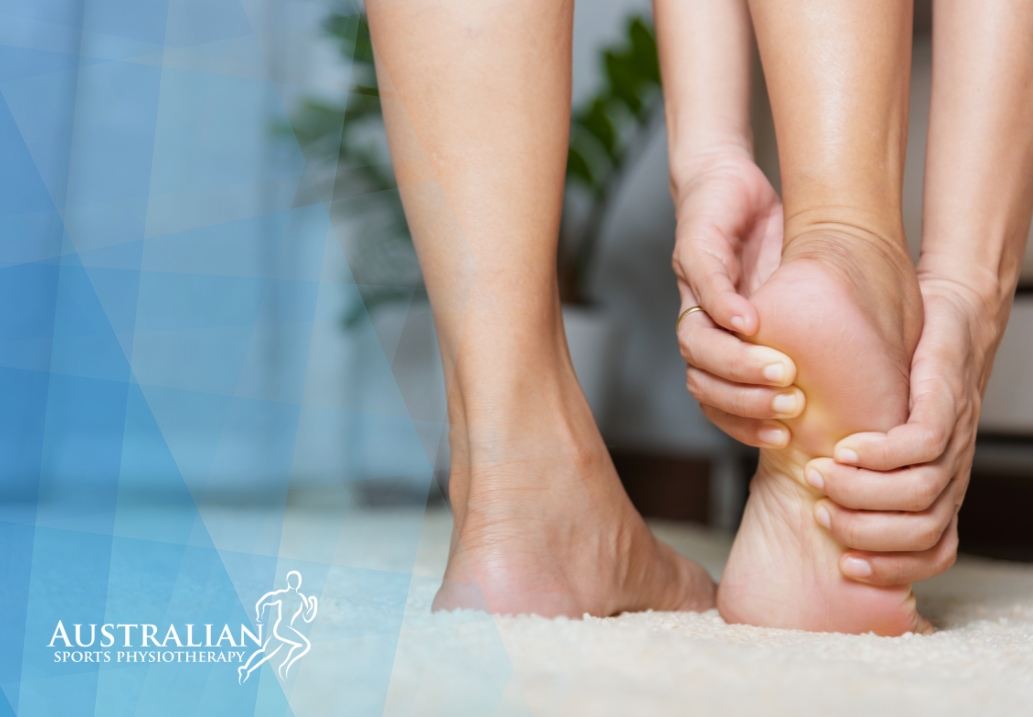
That first step out of bed with a stabbing pain through the heel is usually what sends people searching for plantar fasciitis treatment. It eases off after a few minutes of walking, then flares up again after sitting for a while, or after a longer run than usual. For runners, walkers and anyone who spends most of the day on their feet, this pattern is one of the more common reasons people end up in a physiotherapy clinic.
Plantar fasciitis generally responds well to the right combination of load management, targeted exercise and hands-on treatment. What trips people up is advice that skips past why the tissue got irritated in the first place, which tends to be exactly why relief doesn’t stick.
What’s Actually Going Wrong Under the Heel
The plantar fascia is a thick band of connective tissue running from the heel bone to the base of the toes. Its job is to support the arch and absorb load every time your foot hits the ground. Plantar fasciitis develops when that tissue is loaded faster than it can adapt, producing small amounts of tissue breakdown near the heel attachment rather than one dramatic injury. It’s a gradual overload problem more than an acute one, which is part of why effective heel pain treatment looks past the sore spot itself.
This is why the pain often builds slowly rather than appearing overnight. A sudden jump in running distance, a new pair of shoes with less support, extra hours standing at work, or tight calf muscles pulling on the heel can all push load on the fascia beyond what it’s adapted to handle. Morning pain happens because the tissue tightens overnight and then gets stretched abruptly with that first step, before it’s had a chance to warm up and lengthen gradually.
A physiotherapy assessment usually looks well beyond the heel to work out what’s driving the load. Ankle stiffness, calf tightness, foot posture and even hip and glute control can all play a role, which is part of why a proper foot and ankle assessment tends to get better results than treating the heel in isolation.
Why Some Plantar Fasciitis Treatment Doesn’t Hold
Most people have already tried something before they see a physio: rest, a heel cushion, maybe some stretches from a video online. When that hasn’t worked, it’s rarely because rest or stretching were the wrong ideas. More often, one piece of the picture was missing.
Stretching Without Addressing Calf Tightness
Calf and ankle stiffness feed directly into how much load reaches the plantar fascia with every step. Stretching the sole of the foot on its own, without also working on the calf and ankle, tends to bring short-term relief that fades once the underlying tightness reasserts itself a few days later.
Rest Without a Graded Return to Load
Backing off running or long walks is often the right first move, but pain usually resurfaces if training resumes at the same volume it stopped at. The tissue needs a structured, gradual build-up to rebuild its tolerance, not just time off followed by jumping straight back into old training habits.
Orthotics Treated as the Whole Fix
Orthotics or supportive footwear can reduce load on the fascia while it settles, and they have a genuine place in a treatment plan. Used as the only intervention, though, they support the foot without building the strength or addressing the biomechanics that led to the overload, which tends to leave people vulnerable to a flare-up as soon as the orthotics come out.
Training Volume Outpacing Tissue Capacity
Runners and walkers who increase distance, pace or frequency faster than their tissue can adapt are a pattern seen constantly in clinic. The fascia can handle a substantial amount of load over time, but it needs a progressive build-up to get there rather than a sudden jump in kilometres or a new hill session added all at once.
What Actually Works: The Physio Approach
Plantar fasciitis physiotherapy treatment usually combines a few elements at once rather than relying on any single technique. The exact mix depends on what’s driving the load in each case, but most plans draw from the following.
Load Management First
The first step is usually adjusting activity rather than stopping it altogether. This might mean swapping some running sessions for low-impact cardio for a few weeks, or breaking up long periods of standing at work, while keeping enough activity going to avoid deconditioning. Getting this balance right early tends to shorten the whole recovery process.
Targeted Strengthening for the Foot and Calf
Plantar fasciitis exercises that build calf and intrinsic foot strength give the tissue more capacity to handle everyday load. Calf raises, progressed gradually from both feet to single leg, along with exercises like towel scrunches or short foot activation, are common starting points. Strength work tends to matter more for lasting results than stretching on its own.
Stretching That’s Actually Backed by Evidence
Plantar fasciitis stretches still have a place, particularly calf stretches and fascia-specific stretches done before that first step in the morning. The evidence is stronger for stretching paired with strengthening than for stretching used in isolation, which is part of why a physio-led plan usually combines the two rather than prescribing one or the other.
Manual Therapy and Dry Needling
Hands-on treatment to the calf, ankle and plantar fascia can help reduce tightness and pain in the short term, making it easier to tolerate the exercise program doing the longer-term work. Dry needling is sometimes used alongside manual therapy for particularly tight or irritable calf muscles, though it functions as one tool within a broader plan rather than a standalone fix.
When Plantar Fasciitis Needs More Than Physiotherapy
Most cases of plantar fasciitis improve with a structured physiotherapy program, but not every case follows the same timeline. If pain hasn’t started easing despite consistent load management and exercise, or if the pain pattern changes noticeably (spreading beyond the heel, appearing at rest, or accompanied by numbness or tingling), that’s worth flagging with your physiotherapist or GP.
Imaging is occasionally used to check for a fascia tear or a heel spur contributing to symptoms, and in more persistent cases a GP or sports doctor may discuss options such as a cortisone injection or shockwave therapy. These aren’t usually first-line treatments, since they address symptoms rather than the load and capacity issues underneath, but they can have a place in a broader plan for cases that haven’t responded as expected.
Plantar Fasciitis Treatment: Your Questions Answered
| Question | Answer |
|---|---|
| What’s the most effective treatment for plantar fasciitis? | Effective plantar fasciitis treatment typically combines load management, calf and foot strengthening, targeted stretching and manual therapy rather than relying on a single approach. Addressing what’s driving the load, whether that’s training volume, footwear or calf tightness, tends to produce more lasting results than treating the heel pain in isolation. |
| Do plantar fasciitis stretches actually help? | Stretching can ease symptoms, particularly calf stretches and fascia stretches done before that first step in the morning. The evidence supports combining stretching with strengthening exercises rather than using stretching alone, since strength work builds the tissue capacity needed to handle everyday load. |
| How long does plantar fasciitis treatment usually take to work? | Recovery timelines vary depending on how long symptoms have been present and how consistently a treatment plan is followed. Many people notice gradual improvement over several weeks to a few months with a structured physiotherapy approach, though more persistent cases can take longer to settle. |
| Should I see a physio or a podiatrist for heel pain? | Both physiotherapists and podiatrists treat plantar fasciitis, and the right choice often depends on what else is involved. A physiotherapy assessment looks at ankle, calf and hip factors contributing to load on the foot, while a podiatrist may focus more specifically on footwear and orthotic support. |
| Can plantar fasciitis come back after it settles? | It can, particularly if training volume increases quickly again or the underlying strength and load capacity work wasn’t completed. Building calf and foot strength alongside a gradual return to activity, rather than stopping treatment as soon as pain settles, reduces the likelihood of a flare-up returning. |
| Is dry needling effective for plantar fasciitis? | Dry needling is sometimes used alongside manual therapy to help reduce tightness in the calf and surrounding muscles, which can make it easier to tolerate the exercise program doing the longer-term work. It’s generally used as one part of a broader plantar fasciitis treatment plan rather than a standalone fix. |

Final Thoughts
The real answer to how to fix plantar fasciitis for good usually comes down to identifying why the tissue got overloaded in the first place, not just treating the pain in isolation. Stretching, rest and supportive footwear all have a role, but they work best as part of a plan that also builds strength and gradually restores the activity you’re trying to get back to. Improvement tends to happen gradually over several weeks to a few months, with the exact timeline shaped by how long symptoms have been present and how consistently the plan is followed.
If heel pain is showing up every morning or after your longer runs, a plantar fasciitis physio assessment can help identify what’s driving it and build a plan around your specific activity.
Book online for our Ivanhoe, Coburg, Preston or East Doncaster clinics, no referral required.