

Most people ask this before they even book their first appointment, and it is a fair question. You want to know what you are committing to, both in time and cost, before you walk through the door. The honest answer is that the number of physio sessions you need depends on specific, knowable factors rather than a vague response of ‘it varies.’
This article breaks down what shapes a physiotherapy treatment plan, how many sessions different conditions typically require, and what you can expect from each visit, so you can make a more informed decision about booking.
What Happens at Your First Physio Session
The first appointment is always an assessment. Your physiotherapist will spend time understanding your history, not just where it hurts, but how it started, what makes it better or worse, and what you are trying to get back to. This part of the process matters more than people expect.
From there comes a physical examination. Depending on your presentation, this might include testing the range of motion, strength, joint mobility, and movement patterns. The aim is to identify the root cause rather than just the symptom sitting on the surface.
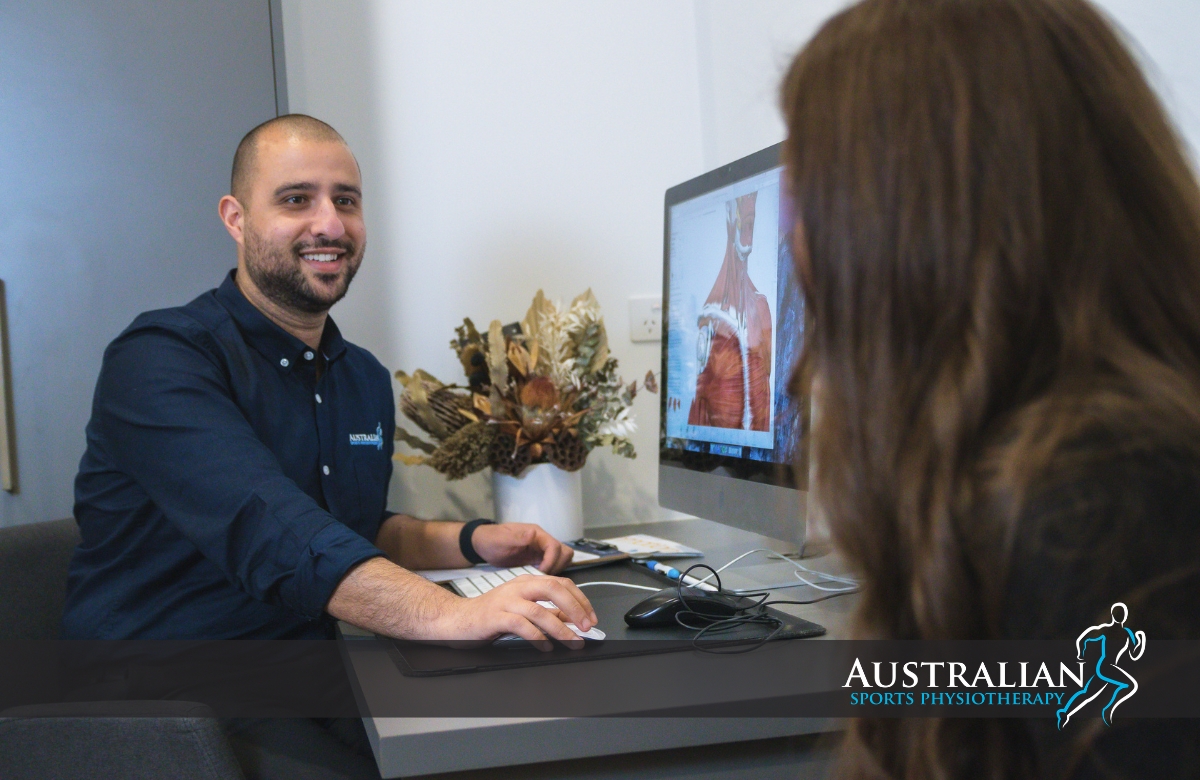
You will usually receive some hands-on treatment at the first appointment too, but the primary focus of the initial session is building a clear picture of your condition, and sometimes this comes with reviewing 3D interactive models, drawings and easy-to-understand examples. By the end of session one, you should leave with a working diagnosis, a plain-language explanation of what is driving your symptoms, and a treatment plan that outlines the recommended number of sessions. Our physiotherapy services are structured so that this clarity is built into the first appointment, not something you have to chase afterwards.
What Happens in Follow-Up Sessions
Standard follow-up consultations run for 30 minutes also. Each session typically involves a mix of hands-on treatment, such as joint mobilisation, soft tissue work, or dry needling where appropriate, alongside guided exercise targeting your specific injury or condition.
As treatment progresses, the hands-on component usually reduces, and the active rehabilitation component increases. This shift is intentional. The goal is to build your capacity to self-manage, not to create ongoing dependence on treatment. Your physio will reassess at regular intervals and adjust the plan if recovery moves faster or slower than expected. A fine balance between hands-on treatment and exercise prescription usually works best.
How Many Physio Sessions Will I Need? Estimates by Condition
The figures below are general estimates based on common presentations. Two people with the same diagnosis can have very different recovery timelines depending on how long they have had the issue, their overall health, and how consistently they engage with treatment.
Acute Soft Tissue Injuries (Sprains, Strains, Minor Muscle Tears)
Fresh injuries caught early tend to respond well within 4 to 8 sessions over four to six weeks. The body is in an active healing state, compensation patterns have not had time to develop, and the tissue responds predictably to load management and targeted movement.
Low Back Pain
For non-specific low back pain, research supports a short, active course of treatment. Most patients see meaningful improvement within 6 to 10 sessions. Chronic low back pain, meaning pain persisting beyond three months, typically requires a longer course of 10 to 15 sessions. The emphasis shifts toward progressive exercise and sustainable self-management habits rather than relying heavily on passive treatment.
Knee Conditions
This depends heavily on the diagnosis. Patellofemoral pain (commonly called runner’s knee) may resolve with 6 to 10 sessions of targeted strengthening and load management. Post-surgical rehabilitation for a knee replacement or ACL reconstruction is a longer process, typically spanning three to six months of structured physio, but can push out to 12 months of sporadic sessions. Our team manages knee conditions across the full spectrum, from minor irritation through to post-operative care.
Shoulder Pain
Rotator cuff tendinopathy and shoulder impingement are commonly managed over 8 to 12 sessions. Frozen shoulder (adhesive capsulitis) is a longer process by nature and can take several months of consistent management before a meaningful range of motion returns. Post-surgical shoulder rehabilitation timelines are governed by your surgeon’s protocol and typically extend to three to six months.
Neck Pain and Headaches
Postural neck pain and tension-type headaches commonly settle within 4 to 8 sessions, provided contributing factors like desk setup, sleep position, and movement habits are addressed alongside hands-on treatment. If headaches have a cervicogenic origin, meaning they stem from neck structures rather than the head itself, physiotherapy is often the most direct treatment available.
Hip and Groin Injuries
A straightforward hip flexor strain may settle in four to six weeks. Complex conditions such as femoroacetabular impingement (FAI) or acetabular labral tears are a different matter. Conservative management for these diagnoses typically spans three to six months, and some patients proceed to surgery followed by post-operative rehabilitation. Our team has substantial experience in this area, including published research and international presentations through the International Society of Hip Arthroscopy.
Factors That Influence How Many Sessions You Need
Beyond the condition itself, several things shape the total number of appointments required.
- Chronicity. An issue present for years has had time to create compensatory movement patterns throughout the body. These take longer to address than a fresh injury, even when the original source of pain appears the same.
- Baseline activity level. Patients who are already reasonably active tend to respond faster to exercise-based rehabilitation. Their bodies are familiar with loading and recovering, which means therapeutic exercise produces results more predictably.
- Adherence to home exercise. The work done between sessions matters considerably. A 30-minute appointment sets the direction, but consistent daily exercise drives the bulk of structural change. Patients who engage with their home program tend to need fewer total sessions.
- General health factors. Sleep quality, stress levels, and overall health all influence how the nervous system processes pain and how quickly tissue heals. A physio who only focuses on the injury site and ignores everything else is working with an incomplete picture.
When Physio Alone May Not Be the Right Fit
Some presentations require input beyond physiotherapy. If imaging reveals a significant structural issue, such as a large disc herniation with nerve compression, or if symptoms are not improving after a reasonable course of treatment, your physiotherapist should refer you onward. At Australian Sports Physiotherapy, we maintain close working relationships with orthopaedic surgeons and sports medicine doctors, so referral pathways are clear and efficient when needed.
Physio is also not the primary treatment for fractures in the acute phase, active inflammatory arthritis flare-ups, or presentations requiring urgent medical investigation. A thorough initial assessment will identify where you sit and whether a different pathway is more appropriate at this stage.
Physiotherapy Sessions and Treatment Plans: Your Questions Answered
| Question | Answer |
|---|---|
| How many physio sessions will I need? | The number of physio sessions you need depends on your condition and how long you have had it. Acute soft tissue injuries commonly respond within 4 to 8 sessions. Low back pain typically requires 6 to 10 sessions, while post-surgical rehabilitation can span 3 to 6 months. Your physiotherapist will provide a session estimate after your initial assessment. |
| What happens at your first physiotherapy session? | Your first physiotherapy appointment is an assessment session. Your physiotherapist will take a detailed history, conduct a physical examination, and in most cases provide some initial hands-on treatment. By the end of the session you will have a working diagnosis, a plain-language explanation of your condition, and a recommended treatment plan. |
| How long does physiotherapy take to work? | Many patients notice improvement within 2 to 4 sessions for acute conditions, though meaningful function changes often take 4 to 8 sessions. Chronic conditions require longer timeframes. Factors such as how long you have had the problem, your baseline fitness, and consistency with home exercises all influence how quickly physiotherapy produces results. |
| How many physio sessions do I need for back pain? | For non-specific low back pain, most patients see meaningful improvement within 6 to 10 sessions. Chronic low back pain that has persisted beyond 3 months may require 10 to 15 sessions, with a focus on progressive exercise and self-management skills. Your physiotherapist will tailor the plan following a thorough initial assessment. |
| Do I need a referral to see a physiotherapist? | No referral is required to book a physiotherapy appointment at Australian Sports Physiotherapy. Exceptions apply for clients with EPC or Team Care Arrangements, TAC, Workcover, or DVA funding, who will need a referral from their doctor. |
| What is included in a physiotherapy treatment plan? | A physiotherapy treatment plan outlines your diagnosis, the recommended number of sessions, the types of treatment your physiotherapist will use, and your home exercise program. It is built around your specific goals, whether returning to sport, reducing pain, or improving daily function, and is adjusted at regular reassessments throughout your recovery. |
Final Thoughts
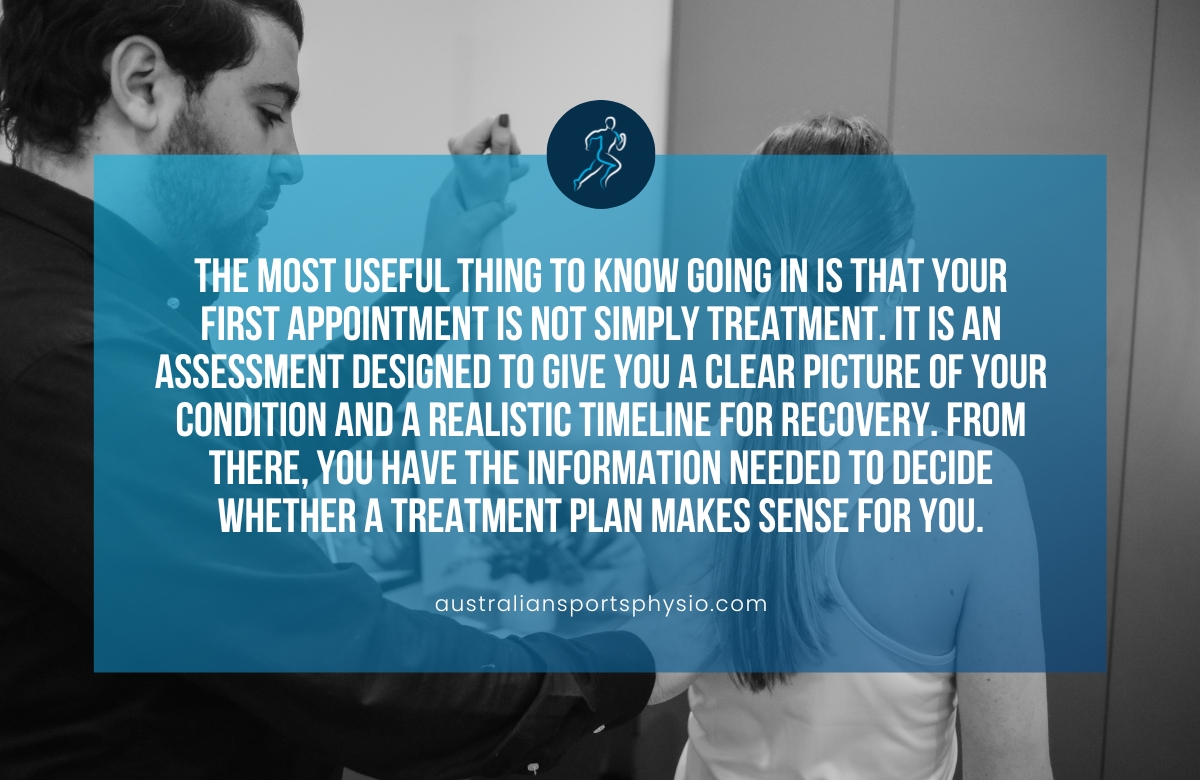
The most useful thing to know going in is that your first appointment is not simply treatment. It is an assessment designed to give you a clear picture of your condition and a realistic timeline for recovery. From there, you have the information needed to decide whether a treatment plan makes sense for you.
If you are unsure whether physiotherapy is the right path, or you want to know what to expect from an initial assessment at one of our Melbourne clinics, our team is easy to reach.
No referral is required to book. Book a physiotherapy assessment at Australian Sports Physiotherapy. Book online here.