Your surgeon has cleared the procedure, the sling is on, and somewhere in the discharge paperwork is a line about “commencing physiotherapy.” What that paperwork doesn’t explain is what shoulder rehab after surgery actually involves week to week, or why your physio keeps changing your exercises every few weeks instead of handing you one sheet on day one.
Recovery from shoulder surgery moves through distinct phases, each with its own goals, restrictions and a reasonable amount of waiting. Here’s what those first twelve weeks generally look like, and where the plan can shift depending on what was actually repaired.
Shoulder Rehab After Surgery: The First Two Weeks
This phase is about tissue, not strength. Tendons, ligaments or the joint itself need time to heal before they can handle load, and most of the early work happens with the arm still in a sling.
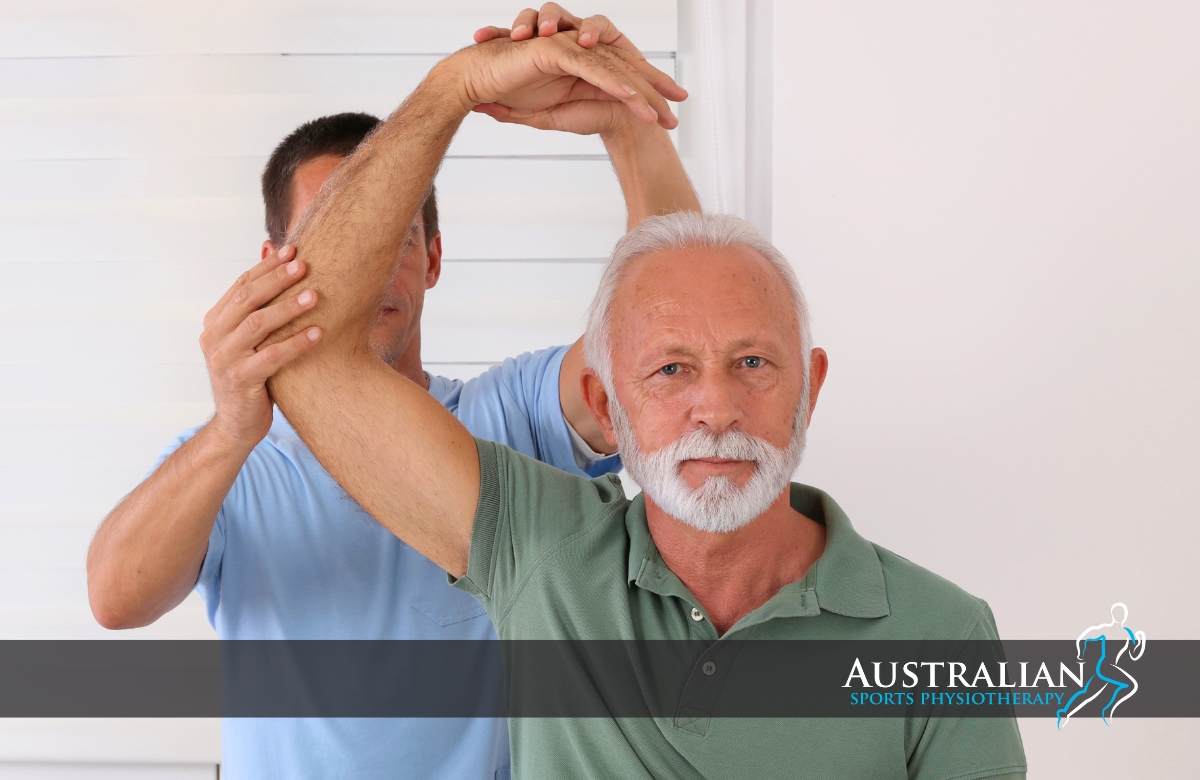
Your physio will focus on passive range of motion: moving the arm for you, or guiding small movements that don’t ask the repaired tissue to do any of the work. Pain and swelling management sits alongside this, mostly through ice and posture correction, since the sling tends to pull the shoulders forward. Your physio may also have you keep the hand and wrist moving to maintain circulation while the arm is immobilised.
It’s common to feel frustrated here. The arm looks fine, surgery is behind you, and the exercises feel almost too small to matter. They matter. Skipping ahead at this stage is one of the more reliable ways to compromise a repair that’s still setting.
Weeks Three to Six: Getting Movement Back
Once your surgeon signs off (and this is their call, not a fixed date), the sling usually comes off for longer stretches and active-assisted movement begins. That means you start contributing some of the effort yourself, often with the other arm or a pulley helping you through the range.
Expect your physio to track range of motion closely during this phase. Reaching overhead and reaching behind your back tend to return at different paces, and asymmetry between the two sides is a normal part of recovery, not a sign something’s wrong. Scar tissue management and continued swelling control run alongside the stretching work.
This is also where the first signs of muscle wasting from weeks of immobilisation become obvious. The shoulder can look noticeably smaller or flatter than the other side. That’s expected, and it starts to reverse once active strengthening begins.
Weeks Six to Nine: Building Real Strength
This is where shoulder rehab after surgery stops feeling like maintenance and starts feeling like training. With your surgeon’s clearance, light resistance work begins, usually with bands before any weights, targeting the rotator cuff and the muscles around the shoulder blade that stabilise the joint.
Closed-chain exercises (think wall push-ups or modified planks) tend to come in around this point too, since they load the shoulder in a more controlled way than free-standing movements. Typical post op shoulder exercises at this stage include band-based external rotation and scapular retraction work, building toward assisted overhead reaches as range improves. Your physio will also start layering in proprioceptive work, retraining the shoulder to sense its position in space, which often gets disrupted after both the injury and the surgery itself.
Soreness after sessions is common and not necessarily a red flag. Sharp or lingering pain is worth flagging at your next appointment rather than working through it.
Weeks Nine to Twelve: Loading the Shoulder for Real Life
By this stage most patients are working through fuller range and tolerating more load, with the program shifting toward the movements you actually need: reaching into a cupboard, carrying shopping, returning to a desk job or, for some, a graded return to sport or manual work.
Functional strength testing usually starts here, comparing the operated shoulder against the other side to see what’s still lagging. Resistance increases, repetitions get more sport- or task-specific, and your physio starts talking through return-to-work or return-to-sport timeframes in more concrete terms.
Twelve weeks is a meaningful marker, not a finish line. Your shoulder surgery recovery timeline doesn’t end at week 12 for most procedures. Full strength and confidence often take three to six months or longer, particularly after larger repairs or joint replacements.
Why Your Timeline Might Look Completely Different
Shoulder surgery recovery looks different from one patient to the next, even under the same surgeon, and the type of procedure is the biggest reason why.
A rotator cuff repair carries strict early restrictions because the tendon needs time to reattach to bone, which is part of why rotator cuff repair recovery often runs more conservatively in the first six weeks than other shoulder procedures. Shoulder replacement recovery often allows earlier movement since there’s no soft tissue repair holding things back. Strength work still tends to build gradually, just for different reasons than a tendon repair. A labral repair sits somewhere in between, with its pace shaped by where in the joint the tear was and how it was fixed.
Age, general fitness, how the joint behaved before surgery and how closely the early restrictions were followed all factor in too. Your surgeon’s specific protocol is the document that actually governs your timeline, not a generic week-by-week chart.
When the Plan Needs to Change
Most shoulder rehab progresses in a fairly predictable direction, but not always, and it’s worth knowing what doesn’t fit that pattern.
Pain that’s getting worse rather than settling, a noticeable loss of range that doesn’t recover between sessions, swelling that returns after it had improved, or a wound that looks increasingly red or warm are all reasons to go back to your surgeon rather than push through with your physio. Stiffness that doesn’t respond to the usual mobility work can sometimes point to a frozen shoulder developing alongside the surgical recovery, which needs its own management approach. None of this is common, but a good rehab program is built to flag it early, instead of assuming every plateau will resolve with more reps.
If you’re managing one of these conditions before or after surgery, our team also covers the broader range of shoulder conditions we see in clinic, from impingement through to instability.
Shoulder Rehab After Surgery: Your Questions Answered
| Question | Answer |
|---|---|
| How long does shoulder rehab after surgery usually take? | Many programs run for around 12 weeks before moving into more general strength and return-to-activity work, though full recovery from procedures like rotator cuff repairs or shoulder replacements often extends to three to six months. Your surgeon’s specific protocol, not a generic timeline, determines how your individual program progresses. |
| Why does my shoulder physiotherapy program keep changing? | Shoulder rehab after surgery moves through distinct healing phases, from protecting the repair early on to rebuilding strength and function later. Each phase has different goals and safe ranges of movement, so your physiotherapist adjusts your exercises as tissue heals and your surgeon clears further movement and loading. |
| When can I start moving my arm after shoulder surgery? | This depends entirely on your procedure and surgeon’s protocol. Most patients begin passive movement, where the physiotherapist moves the arm for you, within the first two weeks, with active movement and light strengthening introduced gradually once the repaired tissue is judged ready to handle more load. |
| Is it normal for shoulder strength to feel uneven months after surgery? | Yes, particularly through the early strengthening phase. Muscle wasting from immobilisation and the surgery itself is common, and strength typically rebuilds gradually rather than evenly. If one side still feels noticeably weaker well into your program, it’s worth discussing with your physiotherapist at your next session. |
| What are signs my shoulder rehab isn’t progressing as it should? | Pain that worsens rather than settles, range of motion that doesn’t improve between sessions, or swelling that returns after settling are worth raising with your surgeon. A good rehab program tracks these signs along the way rather than assuming a plateau will resolve on its own. |
| Can physiotherapy help before I’ve even had shoulder surgery? | Yes. Building strength and range of motion before surgery, sometimes called “prehab,” can support a smoother recovery afterward. It also gives your physiotherapist a clearer picture of your shoulder’s baseline function, which helps shape your rehabilitation plan once your procedure is complete. |
Final Thoughts
Shoulder rehab after surgery isn’t a sheet of exercises you complete and graduate from. It’s a sequence of phases, each unlocked by healing tissue rather than the calendar, and each with a different job to do. Knowing roughly what’s coming, and why your physio is asking for patience in week two and pushing harder by week ten, makes the process easier to trust even when progress feels slow.
If you’ve got shoulder surgery coming up, or you’re already a few sessions into physio after shoulder surgery and want a program built around your specific procedure, our physiotherapists work closely with your surgeon’s protocol through every stage of post-operative physiotherapy.
Book an assessment at one of our Ivanhoe, Coburg, Preston or Doncaster East clinics, no referral required.