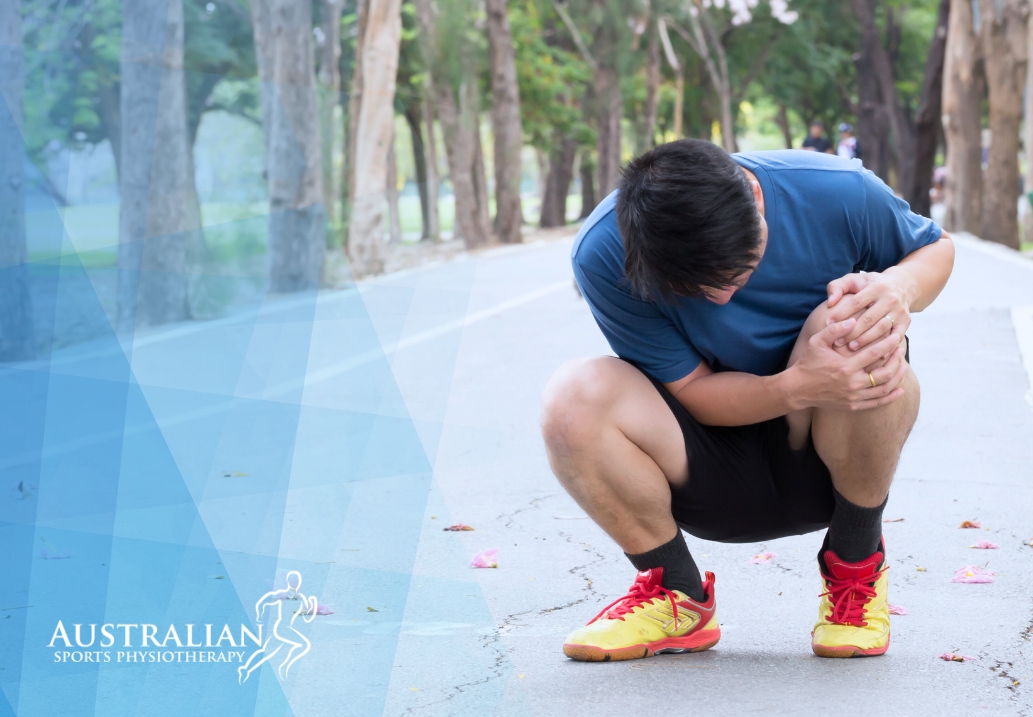
It starts as a dull ache around the front of your knee — maybe when climbing stairs, running, or even just sitting for too long. At first, it’s easy to shrug off. But when that nagging discomfort turns into sharp pain every time you bend your leg, it’s impossible to ignore.
Kneecap pain, often linked to patellofemoral pain syndrome, is one of those frustrating conditions that can sneak up on anyone — athletes, gym-goers, or even people who spend long hours at a desk. It’s not just about overuse; it’s about how your knee moves, how your muscles support it, and whether everything is working together the way it should.
The key to easing that pain lies in understanding what’s really happening beneath the surface — and what steps you can take to restore strength, balance, and comfort to your knees once again.
What is patellofemoral pain?
The knee is a complex joint made up of several parts, one of which is the patellofemoral joint—where your kneecap (patella) glides over your thigh bone (femur). This joint is designed to handle loads when you walk, run, climb stairs, or squat.
But when the kneecap isn’t moving properly, or the joint is under too much stress, it can cause irritation and pain. That’s what we call patellofemoral pain syndrome (PFPS).
What causes patellofemoral pain?
PFPS is usually not due to a single problem but is multifactorial, meaning it’s often a combination of several issues. Here are a few key reasons why pain develops in the patellofemoral joint:
1. Muscle imbalance
Sometimes, the muscles that control your kneecap aren’t working evenly. If the inner thigh muscle (called the vastus medialis) is weaker than the outer thigh muscle (vastus lateralis), the kneecap can get pulled sideways, causing pain.
2. Poor patella tracking
Your kneecap should move smoothly in a groove on the thigh bone. But if it’s misaligned or pulled off track (called “maltracking”), pressure builds up on one side of the joint.
3. Hip and glute weakness
Weak glutes and hip stabilisers can lead to poor leg alignment during walking or running. This affects how your kneecap moves and can lead to pain.
4. Foot mechanics
If your feet roll inwards (a condition called pronation), it can twist your lower leg and change how forces move through the knee. This can stress the patella.
5. Overuse and impact
Activities that involve lots of bending, kneeling, or running (especially downhill) can overload the joint. Over time, this can wear down the cartilage behind the kneecap, a condition known as chondromalacia patella.
6. Other factors
- Direct trauma or injury to the kneecap.
- Changes in footwear or running surfaces.
Common symptoms of patellofemoral pain?
- A dull ache at the front of the knee.
- Pain when going up or down stairs.
- Discomfort after sitting for a long time.
- Clicking or grinding when you bend or straighten the knee.
What can help?
Most people recover well with the right treatment. Your physio might recommend:
- Strengthening exercises for the glutes, hips, and inner thigh.
- Massage or trigger release to tight muscles like the outer thigh or calves.
- Footwear advice or orthotics if you have flat feet or pronation.
- Activity modification to reduce joint stress while you heal.
- Hands-on therapy to help with stiffness or joint alignment.
- Education on posture, alignment, and pain management.
When should you see a physio?
If your knee pain has lasted longer than a few weeks, or it’s getting in the way of your usual activities, it’s time to get it checked. A physiotherapist can assess your movement, identify any contributing factors, and tailor a rehab program just for you.
Will patellofemoral pain ever go away?
The good news is that for many people, patellofemoral pain syndrome can and does go away with the right management and treatment.
Factors that can predict a poor prognosis
- Longer symptom duration (pain lasting longer than 12 months).
- Higher severity of pain (both usual and worst pain).
- Worse self-reported function at the time of diagnosis.
The most crucial step is to see a healthcare professional or a physiotherapist for an accurate diagnosis and a tailored treatment plan, as this significantly increases the chances of a positive outcome.
Final thoughts
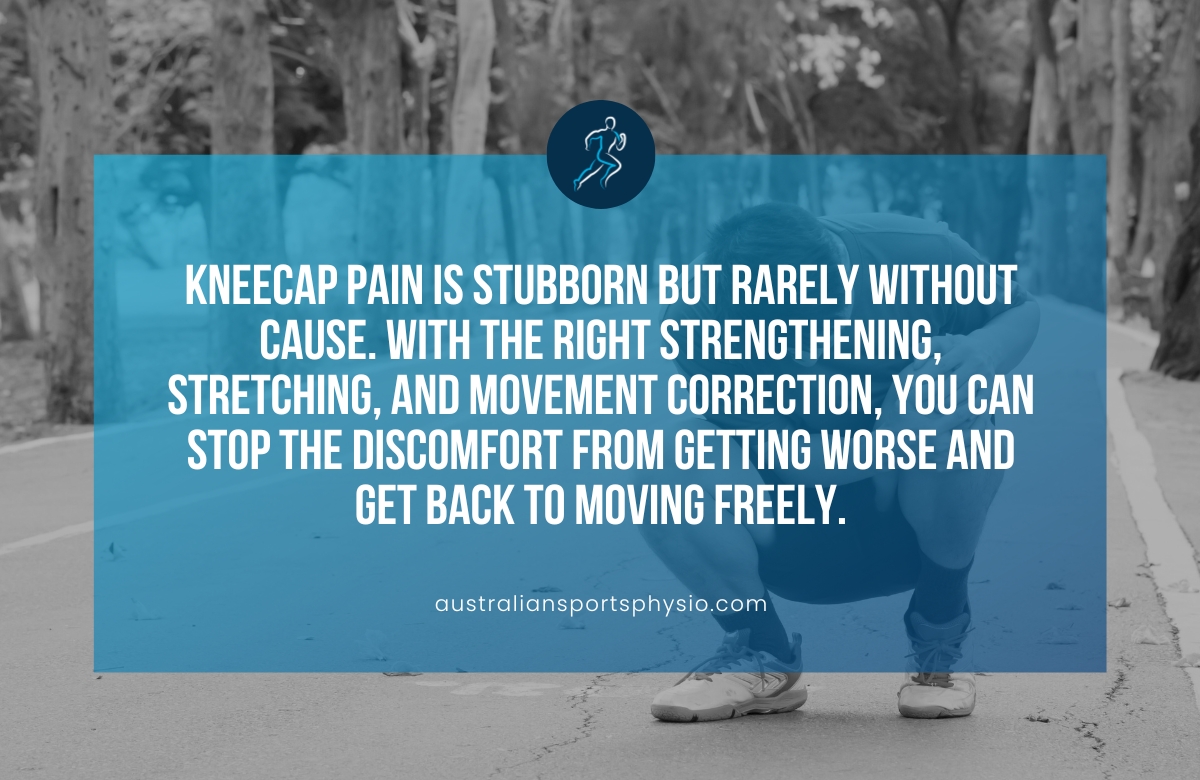
Kneecap pain can be stubborn, but it’s rarely without a cause. Whether it’s muscle imbalance, poor alignment, or overuse, your knee is simply reacting to how your body moves and bears weight. Ignoring the discomfort only allows the problem to grow, while addressing it with proper strengthening, stretching, and movement correction can make a world of difference.
Healing patellofemoral pain isn’t just about reducing symptoms — it’s about restoring balance and teaching your body to move the way it was meant to. With patience, the right exercises, and attention to form, your knees can regain the comfort and strength they deserve, letting you move freely again without that nagging ache holding you back.
Book an appointment with one of our experienced physiologists today for a comprehensive assessment and customised treatment plan.
References
- Dixit, S., DiFiori, J. P., Burton, M., & Mines, B. (2007). Management of patellofemoral pain syndrome. American Family Physician, 75(2), 194–202.
- Lankhorst, N. E., Bierma-Zeinstra, S. M. A., & van Middelkoop, M. (2013). Factors associated with patellofemoral pain syndrome: a systematic review. British Journal of Sports Medicine, 47(4), 193–206. https://doi.org/10.1136/bjsports-2011-090369
- Mayahi, R., Erturan, G., Jackson, W., & Price, A. (2015). The Knee. In M. C. Hochberg et al. (Eds.), Rheumatology (6th ed., pp. 633–646). Mosby. https://doi.org/10.1016/B978-0-323-09138-1.00077-2
- Nuttall, C., & Winters, B. A. (2015). Understanding anterior knee pain: Patellofemoral pain syndrome. Journal for Nurse Practitioners, 11(10), 1032–1035. https://doi.org/10.1016/j.nurpra.2015.08.029
- Patellofemoral Pain Syndrome. (2021). Physiopedia. Retrieved April 29 from https://www.physio-pedia.com/Patellofemoral_Pain_Syndrome