
Hip or groin pain has a way of interrupting even the simplest movements—walking, standing up, or turning in bed can suddenly feel stiff or uncomfortable. Maybe the discomfort came on gradually, or maybe it appeared after a quick twist or strain. Either way, it can limit your confidence and make daily tasks harder than they should be.
These areas carry a lot of your body’s load, so when something isn’t working properly, you feel it in every step. Tight muscles, joint stiffness, or past injuries can all play a part, and ignoring the signs often leads to bigger issues down the road.
Physiotherapy helps you regain smooth, pain-free motion by identifying what’s causing the problem and guiding your body back to balanced movement. With the right approach, you can rebuild strength, restore flexibility, and return to moving comfortably again.
Common causes of hip and groin pain
Pain in this region can stem from several sources, often requiring a specific diagnosis and treatment.
| Category | Common Conditions |
| Muscle/Tendon Injuries | Groin strain (adductor strain): A tear or overstretching of the inner thigh muscles, common in sports involving kicking or quick changes of direction. |
| Hip flexor strain: Injury to the muscles at the front of the hip (like the iliopsoas) from overuse, sprinting, or kicking. | |
| Tendinopathy: Overuse injury or degeneration of a tendon, such as adductor tendinopathy or gluteal tendinopathy (side of the hip). | |
| Joint & Cartilage | Hip osteoarthritis (OA): A degenerative joint disease where the cartilage wears down, causing pain and stiffness. |
| Femoroacetabular impingement (FAI): Abnormal bone growth causes the ball and socket of the hip joint to rub, leading to pain and potential cartilage damage (like a labral tear). | |
| Labral tear: A tear in the ring of cartilage (labrum) surrounding the hip socket. | |
| Inflammatory/Other | Bursitis (e.g., trochanteric bursitis): Inflammation of the fluid-filled sacs (bursae) on the outside of the hip. |
| Referred pain: Pain originating from the lower back or nerves that is felt in the hip or groin. |
Physiotherapy treatment for hip and groin pain
A physiotherapist will conduct a thorough assessment to determine the exact cause of your pain before creating an individualised plan. Key components often include:
1. Pain and symptom management
- Rest and activity modification: Identifying and temporarily reducing activities that aggravate the pain (e.g., limiting running or deep squatting).
- Manual therapy: Hands-on techniques like soft tissue massage, joint mobilisations, or gentle stretches to reduce pain and improve range of motion.
- Modalities: Use of ice or heat to manage acute pain and inflammation.
2. Restoring range of motion and flexibility
- Stretching is crucial, particularly for tight muscles that may be contributing to strain.
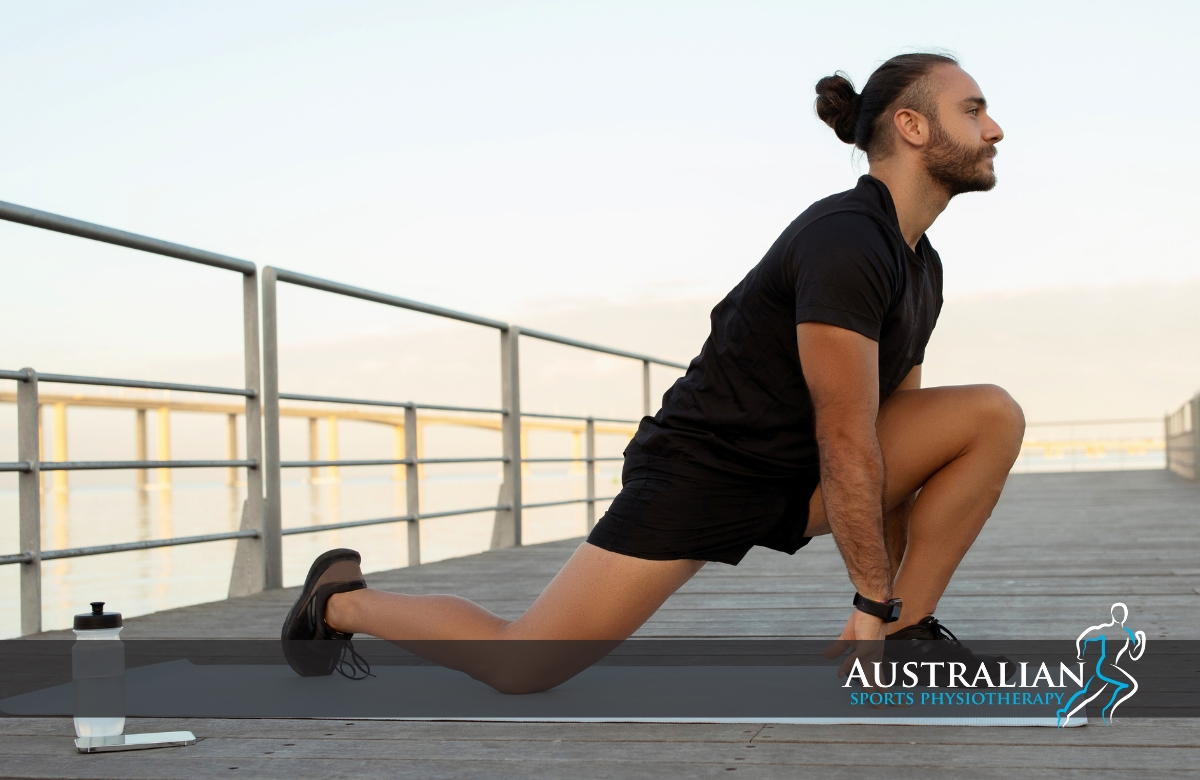
- Hip flexor stretch (kneeling): To relieve tightness at the front of the hip.
- Supine hamstring stretch: Improves flexibility in the back of the thigh.
3. Strengthening and stabilisation
The goal is to strengthen the muscles that support the hip and pelvis, improving stability and movement control. Exercises are typically progressed from basic, low-load movements to more functional and high-load activities.
| Muscle Group | Example Exercises |
| Glutes & Hip Abductors (Outer Hip) | Clamshells: Lying on your side, lift the top knee while keeping your feet together. |
| Side-lying leg raises: Lift the top, straight leg up. | |
| Hip bridge: Lying on your back, lift your hips off the floor. | |
| Hip Adductors (Inner Thigh/Groin) | Ball squeeze (supine or seated): Squeeze a ball between your knees or ankles. |
| Side-lying hip adduction: Lie on your side and lift the bottom leg. | |
| Core & Stability | Single-leg balance: Stand on one leg to improve balance and hip stabilisation. |
| Planks or pelvic tilts: To strengthen the abdominal and deep core muscles. | |
| Functional/Advanced | Squats, lunges, and step-ups: To restore normal walking and movement patterns. |
4. Functional and sport-specific rehabilitation
For athletes or those needing to return to high-demand activities, the program progresses to include:
- Exercises that mimic the movements of their sport (e.g., running, jumping, cutting, kicking).
- High-load strength training (e.g., deadlifts, weighted squats).
- Agility and control drills.
Important Note: It is essential to consult with a doctor or a licensed physiotherapist before starting any exercise program for hip or groin pain. They can provide an accurate diagnosis and ensure the exercises are appropriate for your specific condition and stage of recovery, which is critical to avoid worsening your injury.
Final thoughts
Hip and groin pain can quickly take away the ease of everyday movement, but it doesn’t have to become a long-term struggle. Understanding what’s behind the discomfort and taking steps to address the root cause is the key to lasting relief.
Physiotherapy offers a clear path forward—strengthening the right muscles, improving flexibility, and restoring natural movement so you can feel steady and comfortable again. With consistent care and the right guidance, you can return to the activities you enjoy and move with confidence.
Book an appointment with one of our experienced physiologists today for a comprehensive assessment and customised treatment plan.